



Is Microneedling With PRF Worth It for Acne Scars in Richardson, Texas?
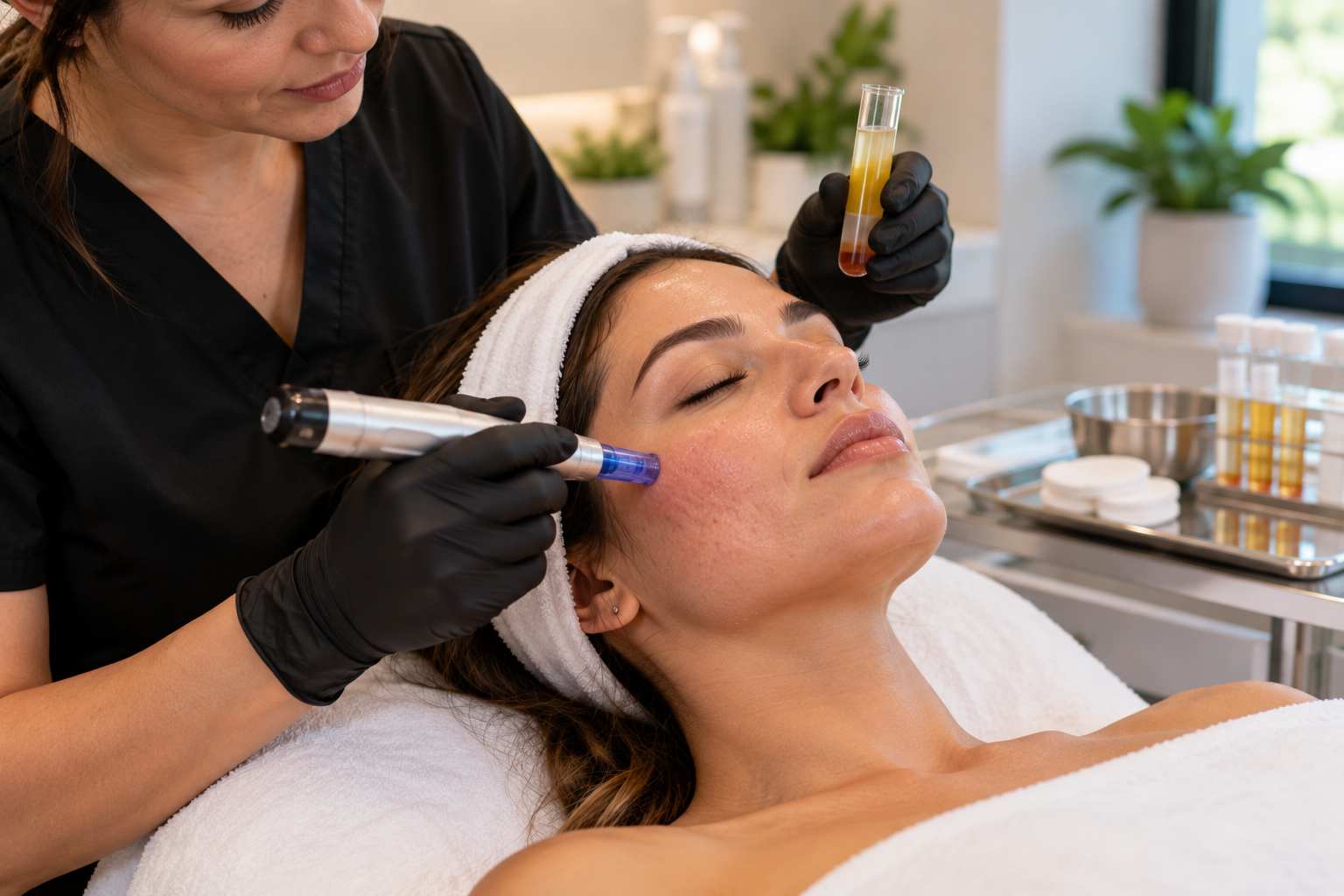
For many people with acne scars, adding PRF to microneedling can be worth it, especially when scars are the rolling or shallow kind and you are willing to commit to a series of sessions. Microneedling on its own stimulates collagen to soften uneven texture. PRF, made from your own blood, adds concentrated platelets and growth factors to the skin while it is primed to repair. Early research is encouraging, but it is still developing, so the upgrade makes the most sense when your provider thinks your scar type and goals are a good match.
If your breakouts are finally under control but the marks they left behind are not, this guide explains what the add-on does, what the evidence says, and how to decide whether to spend the extra.
Why Do Acne Scars Stick Around After Breakouts Clear?
Acne scars form when deep inflammation damages the collagen that supports your skin. When the skin heals, it does not always rebuild that support evenly. Some areas sink, creating depressions, while others heal with uneven texture.
That is why many people in their late teens and twenties feel stuck. They finally found a routine that keeps breakouts calm, yet the texture remains. Serums and exfoliating pads can brighten the surface, but they cannot rebuild collagen deep enough to lift a depressed scar. This is where in-office collagen-building treatments come in.
What Types of Acne Scars Are There?
Most depressed acne scars fall into three broad groups:
- Rolling scars, which create soft, wave-like shadows across the cheeks
- Boxcar scars, which have sharper edges and flatter bases
- Ice pick scars, which are narrow and deep, almost like a large open pore
Knowing which type you have matters, because each one responds differently to microneedling and to add-ons like PRF.
How Does Microneedling Help Acne Scars?
Microneedling at Urbane uses fine needles to create tiny, controlled punctures in the skin, with an adjustable depth of roughly 0.5 to 2 millimeters. Those micro-injuries signal the skin to produce fresh collagen and elastin. Over time, that new support can soften scars, refine large pores, and improve dullness and fine lines.
The American Academy of Dermatology describes microneedling as a minimally invasive treatment that is safe for all skin tones and notes that it is often used to treat acne scars. Results build gradually. Urbane's guidance notes that the best results are usually seen after three treatments spaced one month apart, with improvements continuing for three to six months after treatment. Some people with more significant scarring benefit from additional sessions.
What Is PRF, and How Is It Different From PRP?
PRF stands for platelet-rich fibrin. Like PRP, or platelet-rich plasma, it comes from a small sample of your own blood that is processed to concentrate the platelets. Urbane describes PRF as a regenerative treatment rich in platelets, fibrin, and growth factors.
The fibrin is the key difference. PRF retains a fibrin network alongside its platelets, which is part of what sets it apart from PRP. Because it comes from your own body, it also appeals to people who want a more natural approach to skin rejuvenation.
When PRF is applied during or right after microneedling, the tiny channels created by the needles give it a direct path into the skin at the moment the skin is already in repair mode.
What Does the Research Say About Microneedling With PRF?
The science is promising, though not yet extensive.
In a split-face study published in Dermatologic Surgery, 40 patients with atrophic acne scars received four monthly sessions. One side of each face was treated with injectable PRF plus microneedling, and the other with microneedling plus saline. After 24 weeks, the PRF side showed greater improvement in scar grading and higher patient satisfaction. Rolling scars responded best, followed by boxcar scars, with ice pick scars responding least.
The AAD also notes that combining microneedling with platelet-rich plasma can be especially effective for fading acne scars. Taken together, the research suggests platelet add-ons can enhance microneedling for many people, but individual results vary, and larger studies are still needed.
Is Microneedling With PRF a Good Fit for Gen Z and Younger Adults?
Younger adults are often the ones most motivated to treat acne scarring, and addressing texture early can be part of a long-term skin plan rather than a reaction to years of frustration.
There are also a few things worth knowing before you book:
- Active acne usually needs to be under control first. The AAD notes that dermatologists delay microneedling when painful, deep, or pus-filled breakouts are present.
- If you have taken isotretinoin, timing matters. Tell your provider exactly when you finished your course so they can advise when treatment is appropriate.
- At-home dermarollers are not the same thing. The AAD explains that at-home tools are not designed to puncture the skin the way professional treatment does, produce less noticeable results, and carry risks like infection and scarring when misused.
Budget is another real consideration. PRF adds to the cost of each session, and a full series is an investment. If scars are mild, your provider may suggest starting with microneedling alone and adding PRF only if you want an extra boost. Ask about payment plans during your consultation if spreading out the cost would help.
What Happens During a Microneedling and PRF Appointment?
Your visit typically starts with a quick blood draw. The sample is processed to separate the PRF while your skin is cleansed and numbed with a topical anesthetic. The microneedling portion usually takes around 30 minutes. PRF is then applied to the treated skin or placed in targeted areas, depending on your plan.
Immediately afterward, expect your skin to look red and feel tight, similar to a sunburn. By the next day, most people look pink, can wear makeup, and return to normal activities. The PRF itself typically has minimal downtime, with mild redness, swelling, or bruising that fades within a few days.
Who Should Not Get Microneedling With PRF?
Microneedling is not right for everyone. The AAD advises caution or delay for people who heal slowly, have a history of keloids, have a weakened immune system, are being treated for skin cancer in the area, or have a recent tan, sunburn, or skin infection. Share your full health history at your consultation so your provider can decide whether this combination, or a different approach, makes more sense.
For people with deeper scars or loose skin, your provider may suggest an alternative such as Morpheus8, which pairs microneedling with radiofrequency energy.
Frequently Asked Questions
Does the blood draw for PRF hurt?
The blood draw feels like a routine lab test, with a quick pinch and a small sample. Most people find it far less memorable than they expected. Let your provider know beforehand if needles make you anxious so they can help you feel comfortable.
Can microneedling with PRF fix ice pick scars?
Ice pick scars tend to respond the least to microneedling, even with PRF. In the split-face study above, rolling scars showed the best improvement. If you mainly have ice pick scars, your provider may suggest a combination plan to get the most from your sessions.
How many sessions of microneedling with PRF will I need?
Many people start with three sessions spaced about a month apart, and some need more depending on scar depth and how their skin responds. Your provider will tailor the plan after evaluating your skin.
How soon will I see results?
Some people notice a smoother, brighter look within a few weeks, but collagen takes time. Results continue to build for three to six months after treatment, so it helps to judge progress with before and after photos rather than the mirror alone.
Is microneedling with PRF safe for darker skin tones?
Microneedling is considered safe for all skin tones, which is one reason it is a popular choice for acne scars. As with any treatment, choose a provider experienced with your skin type and follow aftercare closely, especially when it comes to sun protection.
Smoother Skin, One Collagen Boost at a Time
Acne scars can feel like the last chapter of a story you are ready to close. Microneedling with PRF will not erase every mark, but for the right person, it can meaningfully soften texture and help skin look more even over time.
If you are curious whether your scars are a good match, schedule a consultation with Urbane at our Richardson clinic. You can also learn more about our full approach to skin and wellness at Urbane Aesthetics & Wellness.